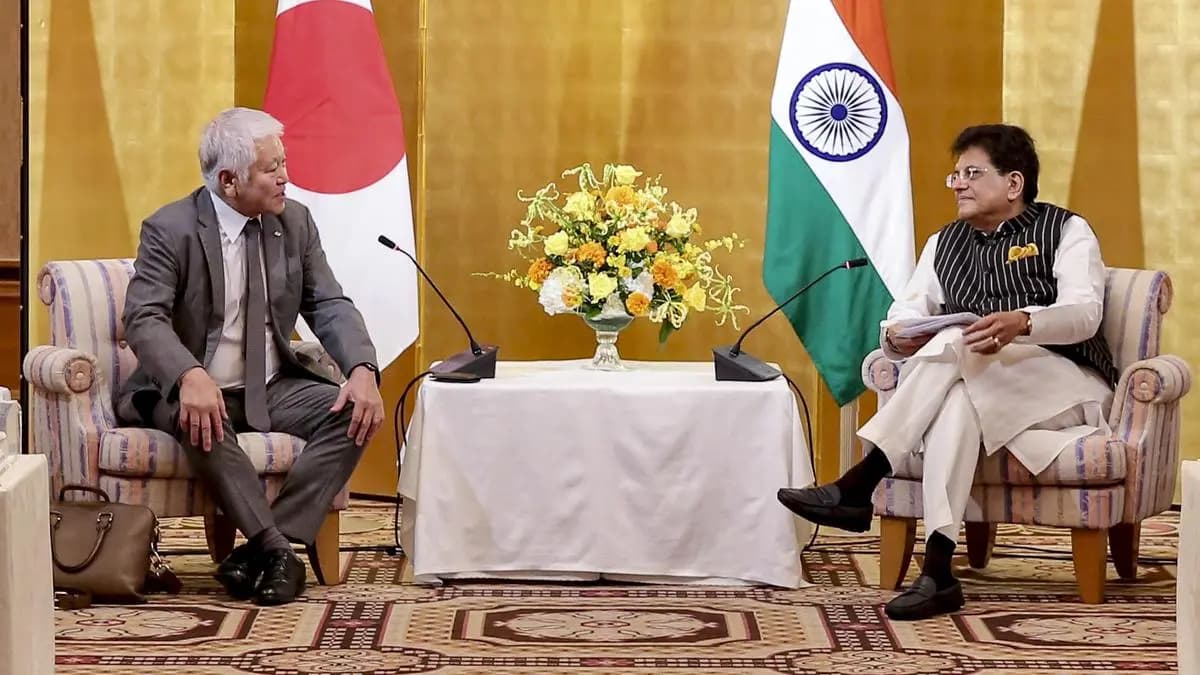
In a significant push to elevate India's industrial capabilities on the global stage, Union Commerce and Industry Minister Piyush Goyal convened a high-level roundtable with chief executives of leading Japanese conglomerates in Osaka today. Addressing a gathering of corporate leaders spanning key industrial sectors, Goyal highlighted India’s booming economic trajectory, stable policy framework, and vast consumer market, making a compelling case for Japanese firms to scale up their manufacturing footprint across the South Asian nation.
The summit in Osaka comes at a pivotal juncture as global multinationals actively seek to diversify their supply chains and bolster operational resilience. During his detailed presentation, Goyal underscored the Indian government's flagship Production Linked Incentive (PLI) schemes, which have systematically transformed sectors such as electronics, automotive manufacturing, pharmaceuticals, and heavy machinery. He reassured investors that New Delhi remains steadfast in its commitment to improving the ease of doing business through regulatory simplification, digital governance, and aggressive infrastructure modernization.
Highlighting the historical bonds between the two nations, Goyal noted that the convergence of Japanese precision engineering and capital with India’s demographic dividend presents an unparalleled synergy for the coming decade. Key discussions during the meeting focused on frontier industries, including green hydrogen, semiconductor manufacturing, electric mobility, and next-generation logistics networks. Japanese leaders were encouraged to leverage India's skilled talent pool to establish global research and development hubs alongside their production facilities.
Japanese corporate heads expressed keen interest in expanding their existing commitments in India, citing the country’s burgeoning middle class and expanding export capabilities as major growth drivers. Several executives praised the ongoing progress of specialized Indo-Japanese industrial townships and called for continued bilateral collaboration in vocational training programs to further align the local workforce with advanced manufacturing processes.
As discussions concluded, both sides reaffirmed their shared vision for a deeper economic partnership anchored in technology transfer and sustainable development. Goyal’s strategic visit to Osaka marks a crucial step forward in fortifying economic ties between the two Asian powerhouses, laying a robust foundation for accelerated capital inflows and long-term industrial collaboration.