
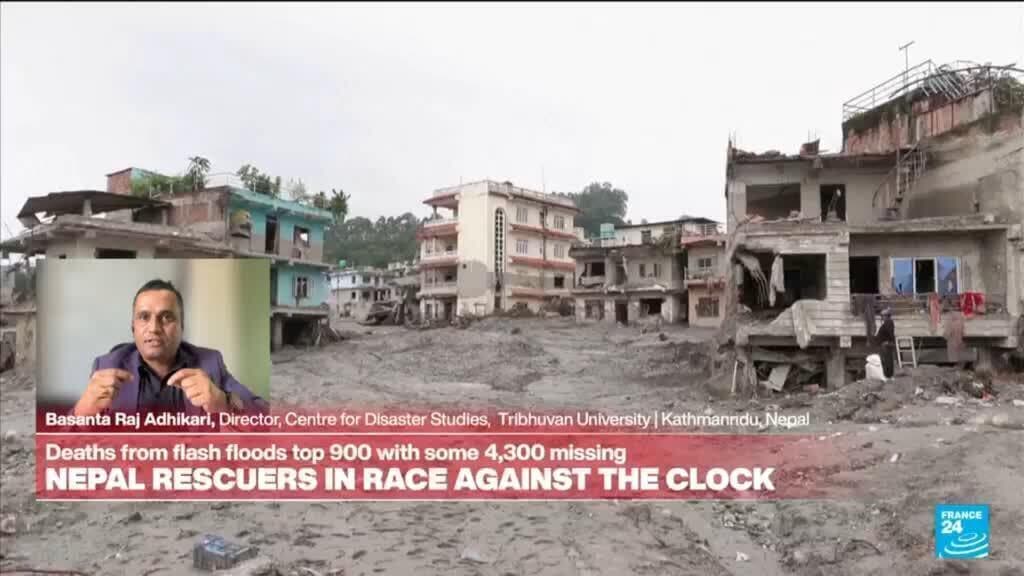
Genie Godula is pleased to welcome Dr. Basanta Raj Adhikari, Director of the Center for Disaster Studies at Tribhuvan University’s Institute of Engineering. He describes the disaster as an illustration of the limits of conventional prevention in the Himalayas. With flood velocities estimated at 170 to 180 kilometres per hour and hazards ranging from ice and snow avalanches to glacial lake outburst floods, he argues that comprehensive monitoring of Nepal’s exceptionally steep and complex mountain terrain is effectively impossible. Yet Adhikari’s analysis is not fatalistic. Instead, he shifts the emphasis from attempting to predict every extreme event toward risk-informed adaptation. Nepal, he argues, should identify high-risk hotspots through satellite observation, supplement these with ground-based monitoring and early-warning systems, and incorporate that knowledge into risk-sensitive land-use planning.
Nepal floods 'unprecedented', requires new 'engineering approaches, risk-sensitive urban planning'
By Dhallo News · August 31, 2026 at 9:22 PM IST
Source: France 24 - World
Original reporting: France 24 - WorldRead original report →
Have feedback on this article?Report error or suggestion