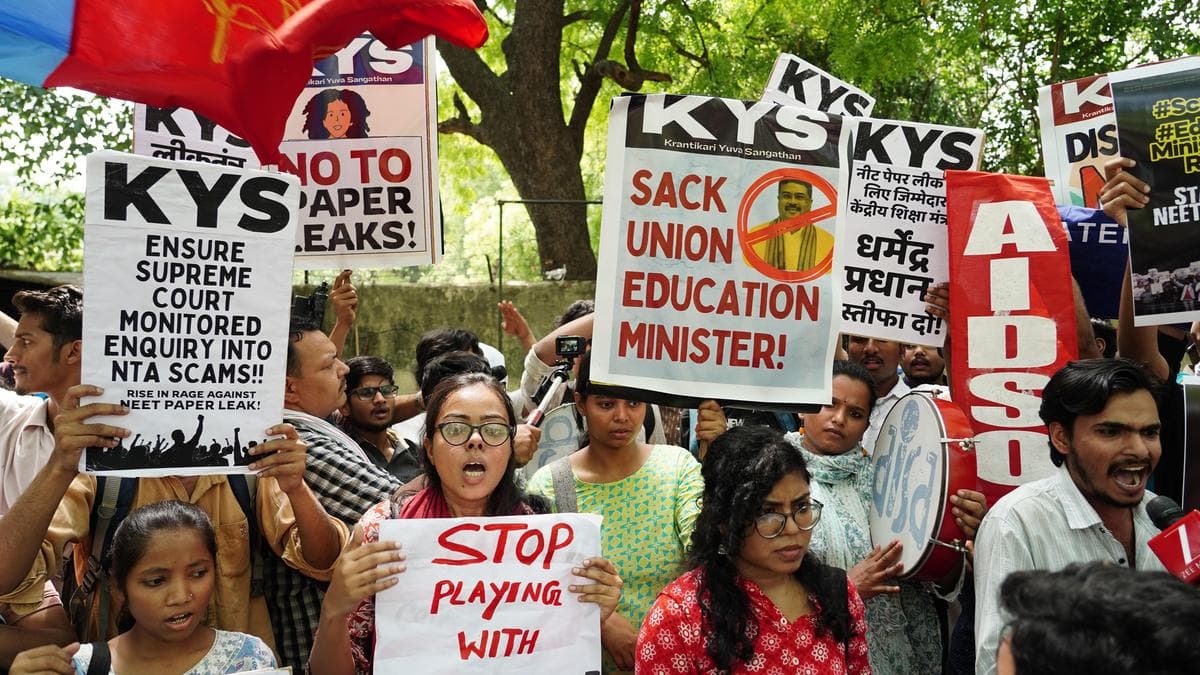
In a significant legal development surrounding the nationwide fallout of the NEET-UG examination protests, petitioners have formally moved the court to request a complete re-constitution of the High-Powered Enquiry Committee (HPEC). The plea highlights growing concerns that the current panel lacks the institutional clout required to thoroughly investigate allegations involving high-ranking figures within the federal executive and security apparatus.
The controversy stems from the aggressive police response and alleged administrative lapses during widespread student-led demonstrations following claims of paper leaks and marking irregularities in the national medical entrance test. Legal counsel for the petitioners argued that any meaningful investigation must scrutinize decisions made at the highest levels of governance, specifically pointing to the Union Executive, the Ministry of Home Affairs, the Delhi Police, and the Rapid Action Force (RAF).
Crucially, advocates representing the student groups made a clear distinction between personal character and institutional capability. They explicitly stated that the application does not question the personal integrity or professional competence of the sitting HPEC members. Instead, the petition focuses entirely on structural constraints, maintaining that the committee remains functionally 'under-equipped' to audit, question, or subpoena officials occupying top-tier constitutional and security posts.
Without an empowered panel capable of looking beyond operational personnel, petitioners contend that the true chain of command behind the crackdown will remain unexamined. As public interest in the integrity of national competitive exams and the right to peaceful protest continues to mount, the court’s decision on whether to expand the committee’s statutory powers or appoint a newly constituted body is eagerly awaited.